

Empowering Fishing Communities. Advancing Innovation. Transforming Livelihoods.
We aim to empower farmers with sustainable practices, quality seeds, and modern technologies to cultivate abundant harvests, support communities, protect resources and ensure global food security.

Innovating for better livelihoods, nutrition and sustainability.
NutriFishPLUS is a collaborative project that builds on the success of the NutriFish (2019–2023) initiative to create inclusive, sustainable, and market-ready fish value chains in Uganda. Led by Makerere University, in partnership with Nutreal (U) Ltd and Kati Farms Ltd, the project seeks to improve the quality and marketability of small pelagic fish while empowering women, youth, and marginalized groups to achieve better incomes and resilience.
The Challenge
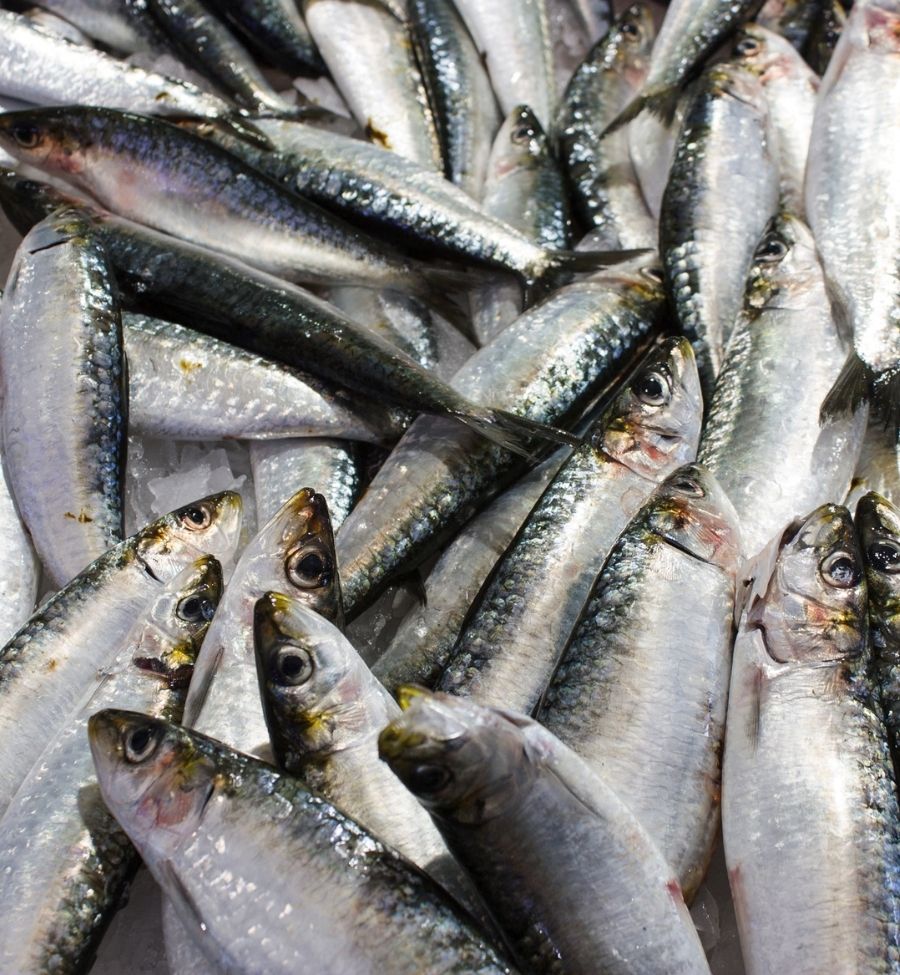
Uganda’s small pelagic fishes (SPFs) — mukene, muziri, and ragoogi — contribute more than half of the total fish catch in the country’s main lakes:
Lake Kyoga (59%)
Lake Victoria (63%)
Lake Albert (70%)
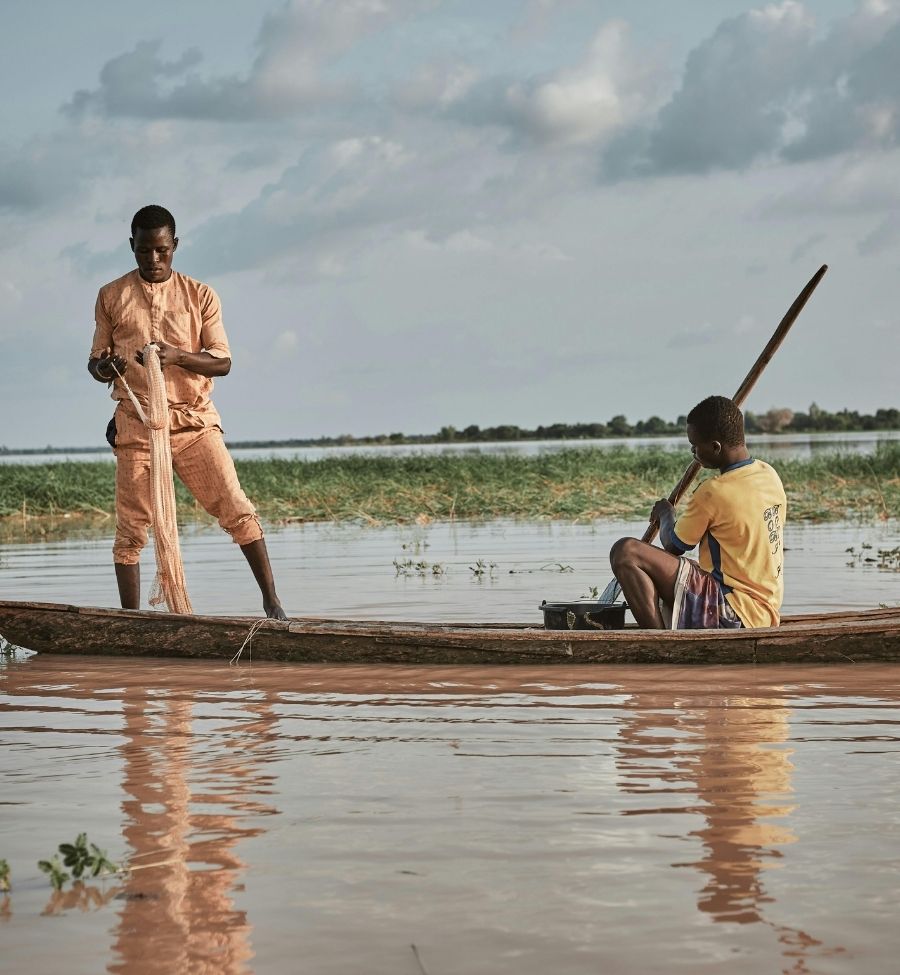
These fisheries sustain over 60% of lakeside communities who depend on them for income, nutrition, and livelihoods.
Yet, the sector faces persistent challenges:
Poor handling and processing methods leading to high post-harvest losses
Limited access to finance and markets for small-scale actors
Inadequate training in processing, value addition, and marketing
Gender inequalities that limit women and youth participation
Few alternative livelihood options, leaving communities vulnerable to overfishing and environmental shocks
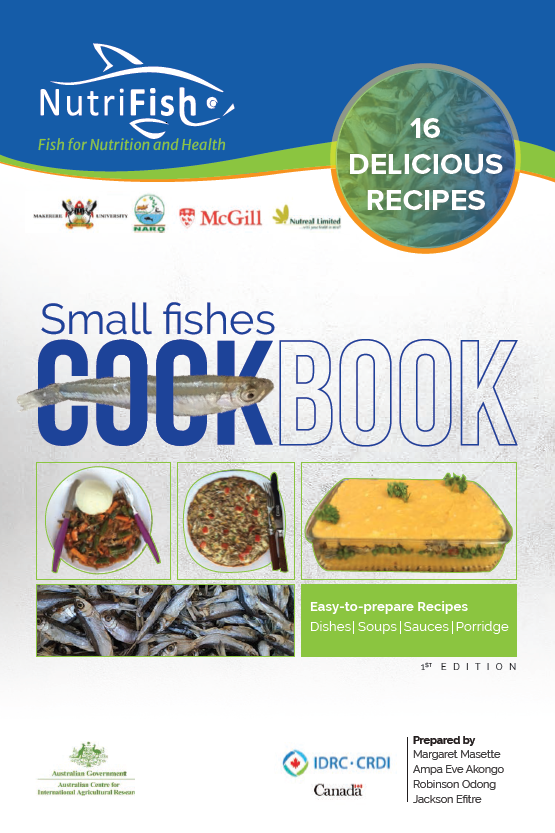
Small Fishes CookBook
This cookbook was developed by the NutriFish project team at Makerere University with the aim of increasing the consumption of the SPFs.
Prepared by:
- Margaret Masette
- Ampa Eve Akongo
- Robinson Odong
- Jackson Efitre
Building on Proven Success
The NutriFish (2019–2023) project made significant progress in tackling these issues. Supported by IDRC and ACIAR, it:
Established group savings schemes to improve access to capital for women and youth
Introduced and piloted solar tent dryers, doubling women’s incomes and tripling the shelf-life of mukene to nearly five months
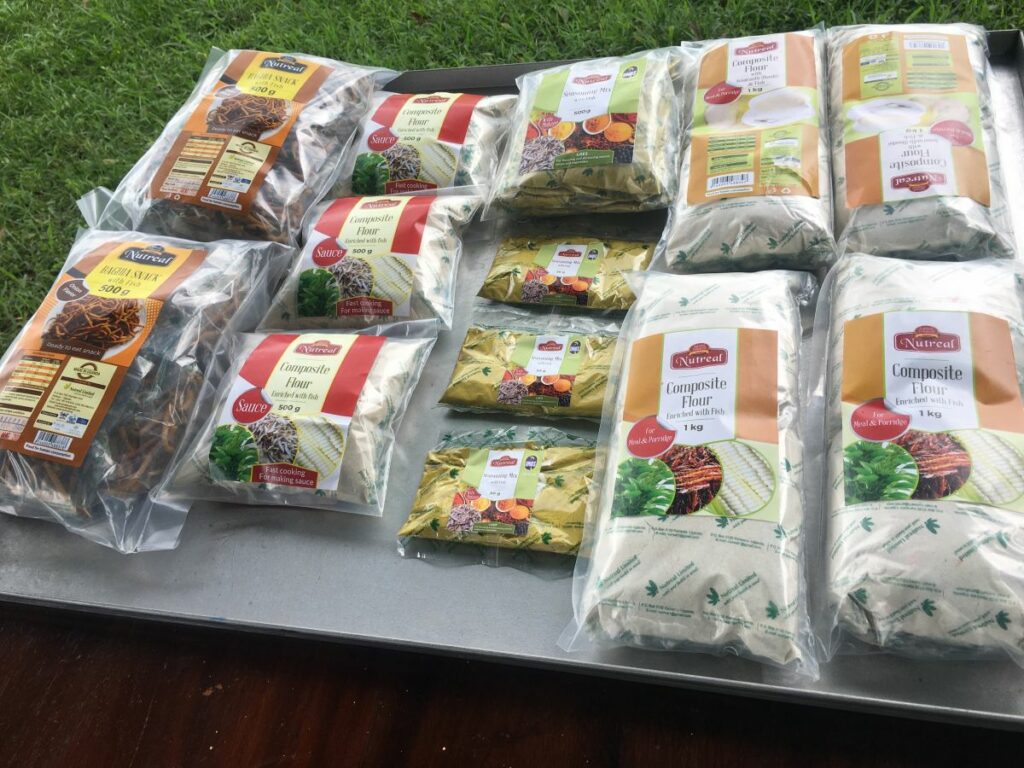
Developed and test-marketed nutrient-enriched fish-based products — including baby food, sauces, and fortified maize meal
Conducted social and behavioural change interventions, increasing women’s participation in profitable ventures and reducing domestic violence by 30% in intervention areas
Despite these achievements, key gaps remain — including the need to scale up adoption of drying technologies, expand market access, strengthen capacity for packaging and branding, and enhance community resilience through diversified livelihoods.
Project Objectives
The NutriFishPLUS project’s general objective is to enhance the incomes and livelihoods of fishing communities in Uganda.
Improve Quality & Quantity
Enhance the processing of small fish through modern drying technologies.
Enhance Market Access
Develop innovative strategies and partnerships that open new market channels.
Promote Inclusion
Ensure meaningful participation of women, youth, and marginalized groups across the value chain.
Strengthen Resilience
Diversify income sources to cushion communities from environmental and economic shocks.
Research Action
NutriFishPLUS applies Scaling Science Principles – justification, optimal scale, coordination, and dynamic evaluation – to extend and deepen the impacts of the previous project.
Core Innovations
Solar Tent Dryers & Raised Drying Racks
Improve fish quality, reduce contamination and extend shelf-life.
Market Linkages & Digital Tools
Connect producers with better-paying buyers locally regionally, and internationally.
Alternative Livelihood Models
Introduce income diversification strategies to reduce dependency on fishing alone.
Gender and Youth Empowerment
Equip marginalized groups with entrepreneurship, leadership and financial management skills.
Project Outcomes
4.9/5
The research project aims to achieve sustainable improvements in fish processing, market access, and economic empowerment through scalable and inclusive approaches. By leveraging scaling principles, the project will generate actionable insights and innovations that can be replicated and adapted to diverse contexts.
Higher Quality Fish Products
Cleaner, safer, and more marketable small pelagic fish.
Expanded Market Reach
Better prices through diversified market channels.
Empowered Women & Youth
Active participation and leadership in fish-based enterprises.
Resilient Communities
Reduced dependence on overfished stocks through alternative livelihoods.
Connecting to Build a Sustainable Future Together
The Department of Zoology, Entomology and Fisheries Sciences, College of Natural Sciences, Makerere University will work in partnership with Nutreal Limited and Kati Fish Farms to Implement the NutriFishPLUS Project.
NutriFishPLUS is jointly funded by the Australian Centre for International Agricultural Research (ACIAR) and Canada’s International Development Research Centre (IDRC) under the Cultivate Africa’s Future Plus (CultiAFPLUS) program — an initiative that supports cutting-edge research to strengthen food security and resilience across Eastern and Southern Africa.
Makerere University
Department of Zoology, Entomology and Fisheries Sciences
Dr. Jackson Efitre
jackson.efitre@mak.ac.ug
Nutreal (U) Limited
Director
Prof. Dorothy Nakimbugwe
nutrealfoods@gmail.com
dnakimbugwe@gmail.com
Kati Fish Farm
Director
Ms. Lovin Kobusinyge
lovien2001@yahoo.com